CURRENTLY READING
Autistic Masking: The Cost of Looking Fine When You’re Not (Every Day, for Thirty Years)
Back to blog
Autistic Masking: The Cost of Looking Fine When You’re Not (Every Day, for Thirty Years)
Masking isn’t a costume you take off at home; it’s thousands of tiny corrections running every waking minute. Here’s the real cost of looking fine for thirty years, the masks I never knew I wore, and what unmasking actually means.
The real cost of looking fine when you’re not, every day, for thirty years.
I rehearse phone calls, sometimes in my head, sometimes out loud.
Not always important phone calls. Phone calls to book a doctor’s appointment and other mundane tasks. I script the opening line, predict three possible responses, and prepare a follow-up for each. I do this while making a cup of coffee, before I’ve even picked up the phone. Sometimes I rehearse for so long that I miss my chance to get an appointment entirely.
For most of my life, I thought this was just the normal way people made phone calls.
It turns out that it isn’t.
#What masking actually is
Masking isn’t one long performance. It isn’t a costume you put on for a party and take off at home. That’s the version pop culture tells you about, and it’s wrong by an order of magnitude.
Autistic masking is thousands of micro-decisions per day, almost all of them running silently in the background.
- The angle of your face when you’re listening.
- The exact pause length before you answer.
- Which version of “fine” you give when someone asks.
- Whether to mention the thing that hurt your feelings or pretend you didn’t notice.
- How much eye contact is too little and how much is too much.
- The pace of your speech, the pitch of your voice, and the words you swap out because your natural vocabulary feels “too strange.”
You are not deciding any of this consciously. You are deciding all of it constantly.
For autistic adults, especially late-diagnosed ones, this isn’t a temporary stress response. It’s the operating system. It started in childhood, it ran continuously, and it got refined every single time the unmasked version of them got punished.
#The masks I didn’t know I was wearing
The list, once you start compiling it, is always longer than you expect.
- I masked the way I stand.
- I masked the volume of my voice when I was out in public.
- I masked enthusiasm about things I loved, because being too obviously interested in a niche topic had cost me friendships at an early age.
- I masked confusion in meetings by nodding at things I hadn’t fully understood and frantically Googling them after.
- I masked sensory pain by smiling through harsh fluorescent lights.
- I masked needing to leave by forcing myself through the small-talk circle one more time.
For a long time, for over thirty years, I just didn’t understand that I was masking, or what it even was. That’s the illusion the operating system creates. You can’t easily make out the interface layer you’re running on.
This part is hard to explain to people who haven’t lived it. Imagine navigating a complex mirror maze where you have to constantly calculate distances, angles, and what’s real versus what’s just a reflection, while the person you’re walking with is just strolling down a straight, open hallway.
That’s the difficulty. That’s what’s draining.
#The cognitive bill nobody told you about
Masking isn’t free. It is, in fact, incredibly expensive in a very specific way.
Every single micro-decision uses executive function. Executive function is finite. You only have so much of it in a day before the system starts to break: words fail to arrive, decisions stall, your body refuses to cooperate, and the ability to start anything new completely vanishes.
Spend a working day masking your way through six meetings and you will not have the bandwidth left to make dinner. That isn’t laziness. It’s the price you have to pay.
For a lot of late-diagnosed autistic adults, this price comes due as autistic burnout, a slower, heavier collapse that the world doesn’t have great language for. It’s also why the recovery from a “normal” day at work can look entirely strange from the outside. A two-hour coffee with friends might cost you two days in bed. A wedding might cost you a fortnight.
You are not bad at being a person. You are paying full price for things other people get for free, or on subscription.
#The identity blur
Here is the part that the books don’t always tell you. If you mask for long enough, you stop being able to tell which preferences are actually yours and which belong to the mask.
Do I actually like this person, or have I been performing liking them for so long that it just feels like the truth?
Do I want this job, or did I just want the version of myself that getting this job seemed to require? Do I enjoy this hobby, or did I just learn early on that mentioning it made me seem normal?
The work of unmasking is, in large part, the work of self-discovery. It happens slowly, badly, and with a lot of false starts and hurdles to jump. It is not a single, grand revelation. It is years of small, quiet experiments where you let the unmasked version answer first just to see what it says.
Some of what it says will surprise you. Some of it will be uncomfortable. But some of it will be a relief so large that you didn’t even know you were carrying its burden.
#Unmasking isn’t “taking the mask off”
This is a common misconception that does a lot of damage.
Unmasking is not throwing off the mask in one cathartic moment and walking into Monday morning as your raw, true self. That version frequently gets you sacked, ends relationships, and makes things significantly worse before they get better.
Unmasking is building safe spaces where you don’t have to wear it, then expanding those perimeters slowly. It’s noticing where the mask feels heaviest and asking whether it truly has to stay there. It’s giving yourself permission, in the right rooms with the right people, to be the unrehearsed version and see what happens.
It’s also choosing, sometimes, to keep masking. Masking at the airport. Masking at the doctor’s. Masking when the immediate cost of not masking is higher than the energetic cost of doing it. The goal isn’t a completely mask-free life. The goal is a life where the mask becomes a tool you choose to pick up, not a uniform you forgot you were wearing.
#One small experiment for this week
Find one safe person. Just one.
In one conversation with them this week, don’t perform the version of yourself you usually present. Don’t rehearse your responses in advance. Don’t soften your facial expression to match an “appropriate” social temperature. Don’t smile if you don’t genuinely feel like smiling. Answer their questions as the unrehearsed version, not the version you’d present to your line manager.
Notice what happens. Notice how they respond. Notice what you do, and how your brain and body react to the lack of pressure.
Think of this as the start of an inventory: noticing the small ways you mask so you can choose which ones are worth keeping. You cannot change what you cannot see, and most of these masks have been completely invisible for as long as you have been wearing them.
If you’ve spent a lifetime being the version of yourself that other people seem to prefer, the version underneath is still in there. Quieter than you remember. A bit dusty maybe, but worth the journey.
— Ollie
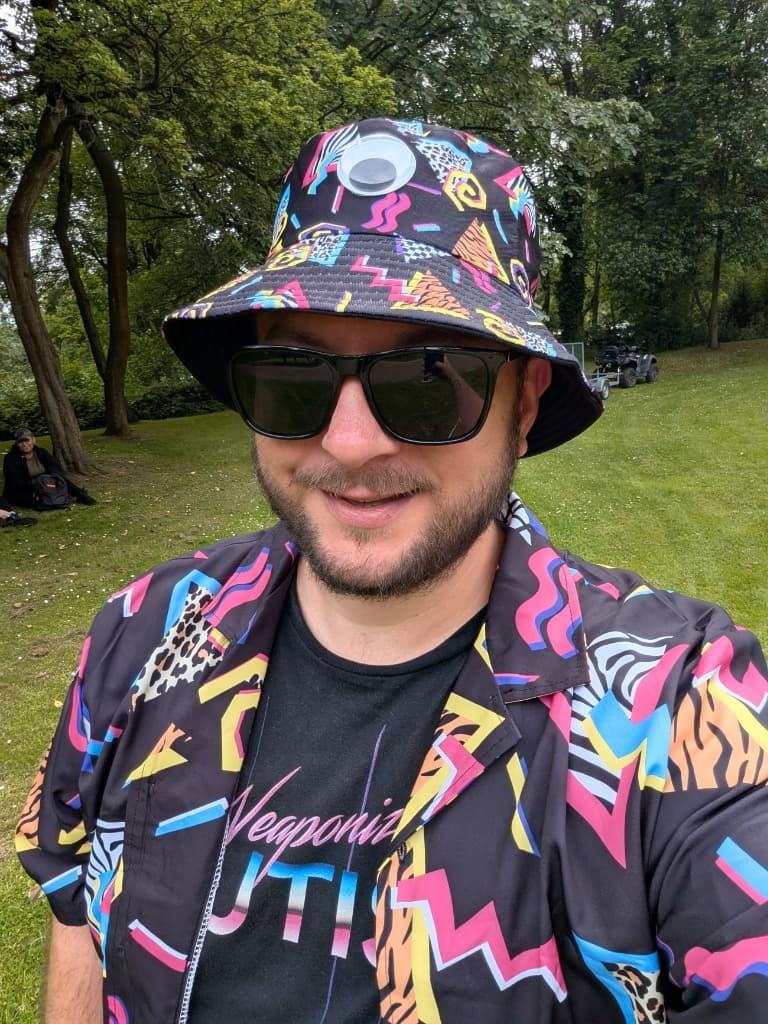
WRITTEN BY OLLIE
I’m a late-diagnosed AuDHD adult and the person behind neurodivers³. I write about burnout, masking, attention, identity, and the everyday reality of living with a neurodivergent brain.
RELATED READING
All posts Keep reading.
³
neurodivers3
Autistic Burnout: What It Actually Feels Like (And How I Get Out of It)
UNMASKED LIFE
It isn't tiredness and it isn't depression; it's the quiet collapse that comes when a brain has masked and managed for too many years. Here's what autistic burnout actually feels like, the signs I missed, and how I slowly climb back out.
27 June 2026READ POST →
³
neurodivers3
47 Open Browser Tabs: A Love Letter to the Tab-Hoarding Brain
DIGITAL LIFE
Forty-seven open tabs aren't a discipline problem; they're a neurodivergent brain thinking out loud. Here's why the usual hacks never stick, what each tab is really holding, and a kinder triage that forgives the ones you finally choose to close.
13 July 2026READ POST →
³
neurodivers3
ADHD Resting: Why Quiet Rooms Make the Spiral Worse (And Active Rest Works)
TOOLS & TEMPLATES
Exhausted but the quiet room makes it worse? For ADHD and AuDHD brains, true stillness can crank the spiral louder. Here's why under-stimulation feels like anxiety, and how low-demand active rest gives your nervous system somewhere safe to land.
9 July 2026READ POST →
Replies (1)
Thank you!
Comments are moderated. Your email will not be published.